
Searching Hale County Criminal Dockets
The Hale County Tyler Odyssey portal is the county's Civil and Criminal Public Access site. Start there. If you know the exact cause number, type it in. If not, search the defendant name the way the clerk indexed it. Narrow by court or date only if the live form lets you. Access can be denied at times. So have a direct call to the clerk as a fallback for any docket search. Felony records live with the District Clerk. County Court criminal matters sit with the County Clerk. Fine-only cases may still be held by a JP or municipal court. Check that court's own case lookup.
- Identify the court from the notice, citation, or case number.
- Search the local portal by exact cause number or name.
- Match court, case style, filing date, and status.
- Read charges, settings, pleas, orders, and disposition in date order.
- Request any filed or certified document from the custodian.
Hale County Odyssey Criminal Access
Treat the portal as an index, not a promise of full documents. Its Hale search menus vary. So do not assume the usual Tyler fields, such as attorney, citation, status, or date range, are turned on. The current screen tells you what is available. Sealed cases, juvenile matters, protected data, and restricted images stay off display. The official Hale County public-access entry shows the court's own access screen.
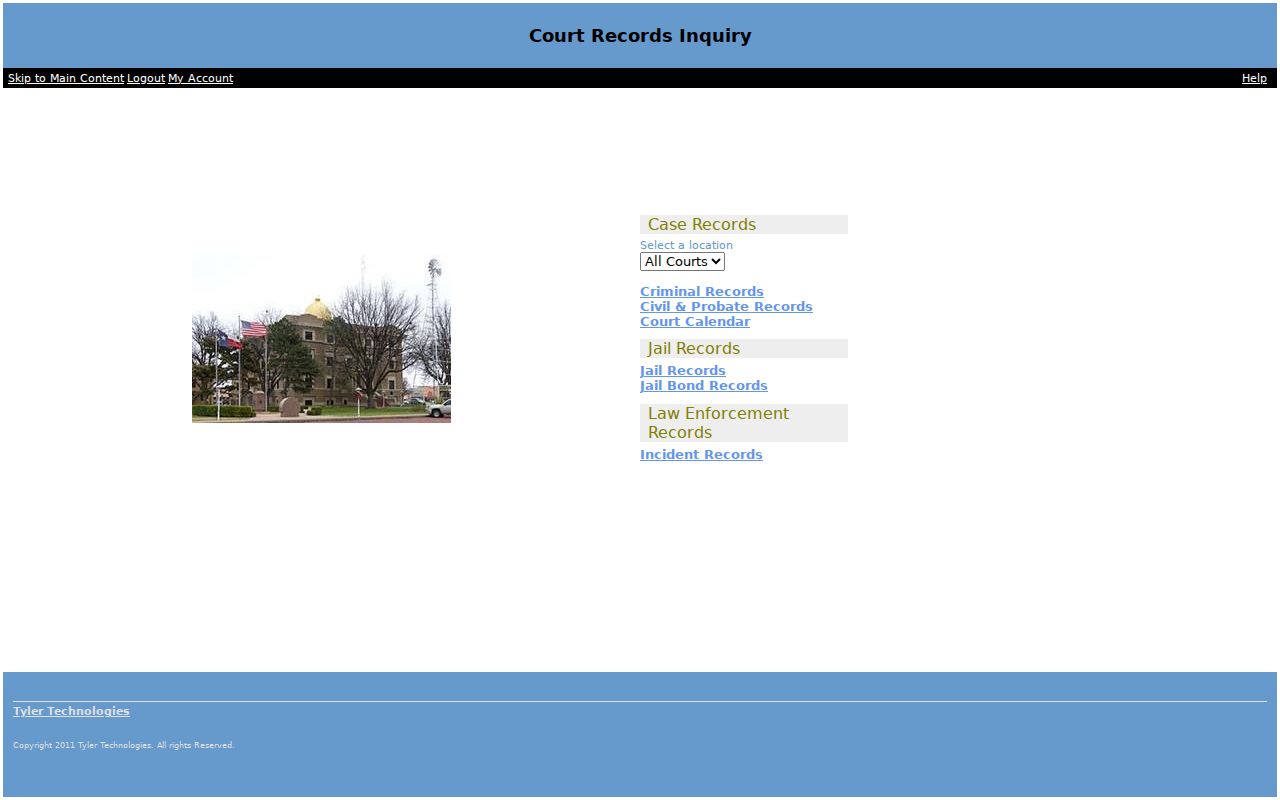
If the portal blocks you, turn to re:SearchTX and call the right clerk. A failed session does not mean no criminal case exists.
Inside a Hale County Criminal Docket
A criminal docket is a list of events in order. It is not an arrest list. A cause number is not proof of guilt. Read three things together: the charge block, the current status, and the final signed order. Each outcome means something different. A pending charge, dismissed count, acquittal, conviction, or deferred result each carries its own weight.
| Cause number | Hale published examples use letter and number patterns; A- or B-prefix can suggest court assignment, not outcome. |
|---|---|
| Charge | Offense description, degree, and statute may appear when public. |
| Setting | Arraignment, pretrial, plea, trial, sentencing, or another hearing. |
| Plea | The entered plea is separate from final disposition. |
| Disposition | Dismissal, conviction, acquittal, deferred result, or other closing event. |
Open the signed judgment or dismissal order. The label alone may be abbreviated.
Hale County Jury Table Limits
The 64th District Court posts jury-week docket tables. Each listing shows county or week, item number, cause number, case style, and attorney notation. A crossed-out row means the setting changed or was dropped. The table skips the full register, charge detail, bonds, financials, documents, and disposition history. The 64th District Court docket-information page carries the court's own postings.
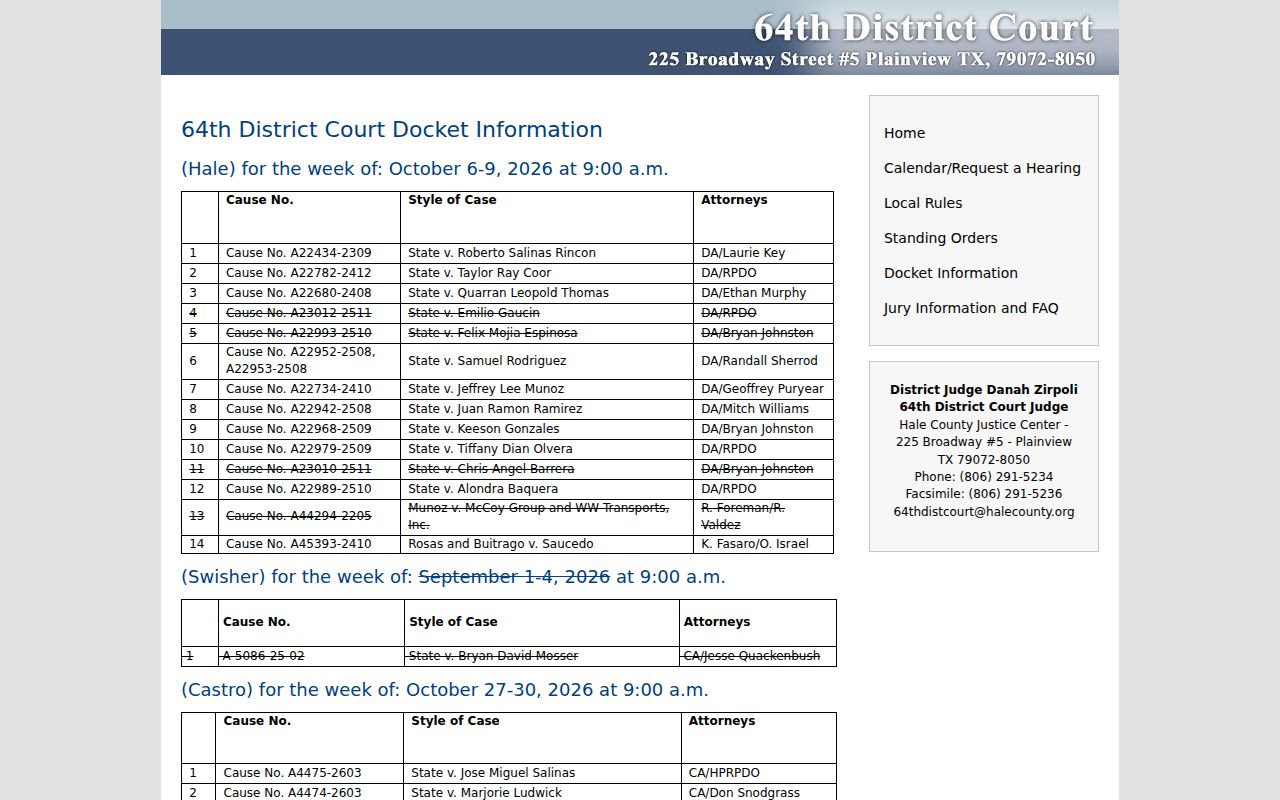
Use the table to spot a jury setting, then confirm it with the coordinator and the District Clerk.
How a Criminal Case Moves
A felony often starts with a complaint or referral. Then it moves through grand-jury action and indictment. From there the docket may show arraignment, attorney appearances, discovery notices, motions, and pretrial settings that repeat. A reset just moves a date. It is not a dismissal. After a plea or trial comes an order, verdict, or judgment. Sentencing may land at the same setting or a later one.
Docket flow: Filing › Arraignment › Pretrial › Plea or Trial › Disposition › Sentencing
After judgment, entries can include community-supervision orders, motions for new trial, notices of appeal, mandates, capias activity, or enforcement. Read the dates in order. A filing is not the same as the court's ruling on it.
Hale County Criminal Terms
Hale County posts no complete local list of event codes. Confirm abbreviations in the case detail or with the clerk. Common terms help you frame the question, but they do not replace that confirmation.
- DISM
- Dismissed. Check the order to learn which count or case was ended.
- NOL PROS
- Nolle prosequi, a prosecution decision not to proceed on the stated charge.
- RESET or CONT
- A reset or continuance that moves a setting.
- CAP or CAPIAS
- Court process directing that a person be brought before the court.
- BOND FORF
- Bond-forfeiture activity, distinct from the underlying charge result.
- SENT
- A sentencing event or entry.
Never translate a short code into a final outcome without checking the signed order.
Courts That Hold Criminal Dockets
Criminal dockets in Hale County sit with several courts. The 64th and 242nd District Courts hear felonies and other district matters. The Hale County District Clerk keeps those records. The Hale County Court handles county-level criminal work through the County Clerk. JP1 and JP3 hear Class C misdemeanors and traffic matters within their jurisdiction. The Plainview, Abernathy, Hale Center, and Petersburg municipal courts cover city ordinances. They also handle fine-only state-law violations inside city limits.
The two District Courts serve more than Hale County. The 242nd jury page groups Hale, Castro, and Swisher settings. So check the county heading and court number. A Plainview citation search is not a felony search. A county Odyssey result will not replace a municipal clerk's docket.
Hale County Clerk Split
For District Court criminal records, contact the District Clerk at 225 Broadway, Suite 4, Plainview, Texas 79072-8050, phone 806-291-5226. That office states its criminal operations are paperless and actively e-filed. For County Court criminal records, contact the County Clerk at 500 Broadway, Room 140, Plainview, Texas 79072, phone 806-291-5261.
Give the clerk the cause number, defendant name, court, approximate filing year, and the document you want. Request each item separately, whether a docket sheet, charging instrument, bond document, judgment, sentence, or certified copy. A transcript comes through the court reporter. Copy charges and turnaround times are not posted, so confirm both before you order.
You can start by phone or at the counter, and the official office pages list mail and fax details for follow-up. Ask staff which method they accept for the exact record and how payment must be made. If the record is in re:SearchTX, registration or document charges may apply, and a downloaded image still may not satisfy a certification need. Older files and items kept from public view can require staff-assisted retrieval. In a written request, state a return address and contact number so the clerk can quote cost, clarify scope, and explain pickup or mailing options.
Hale County Criminal Caseload Context
How busy were Hale County's criminal district courts in 2023? The Office of Court Administration's county summary gives the scale. Courts opened the year with 584 active pending criminal district cases. Another 228 came in, and 317 were disposed of. By year-end, 480 remained active pending. Treat these as combined district activity for Hale County. The report does not split totals for the 64th and 242nd courts. Nothing here proves delay in any one case.
Caseload totals set the scene. They cannot predict a hearing or an outcome. For the recorded events in one matter, use the individual Hale County criminal docket. That record is the one that matters. A yearly figure also cannot tell you if a new filing has reached the public index yet. For that, ask the Hale County District Clerk, which can check recent district filings.
Sealed Dockets and Public Access
A Texas court docket does not travel the same road as a normal open-records request under the Texas Public Information Act. That law covers agency files. Case records answer to court rules, statutes, and orders instead. Texas judiciary policy keeps case records separate from judicial administrative records, and Texas Family Code Chapter 58 adds its own limits on juvenile files.
Access check: A missing case can be sealed, juvenile, expunged, protected, newly filed, old, or simply held by another Hale County court. Ask the custodian which rule or order controls any denied material.
Public access to a Hale County docket has limits. Redaction hides personal identifiers and sensitive material that still sits inside an open record. Sealing goes further and locks the whole record by law or by court order. Do not rely on any listed outcome yet. Confirm it with the clerk where the case was filed.